When Winter Takes Its Toll: Restoring Commercial Lighting After the Storm
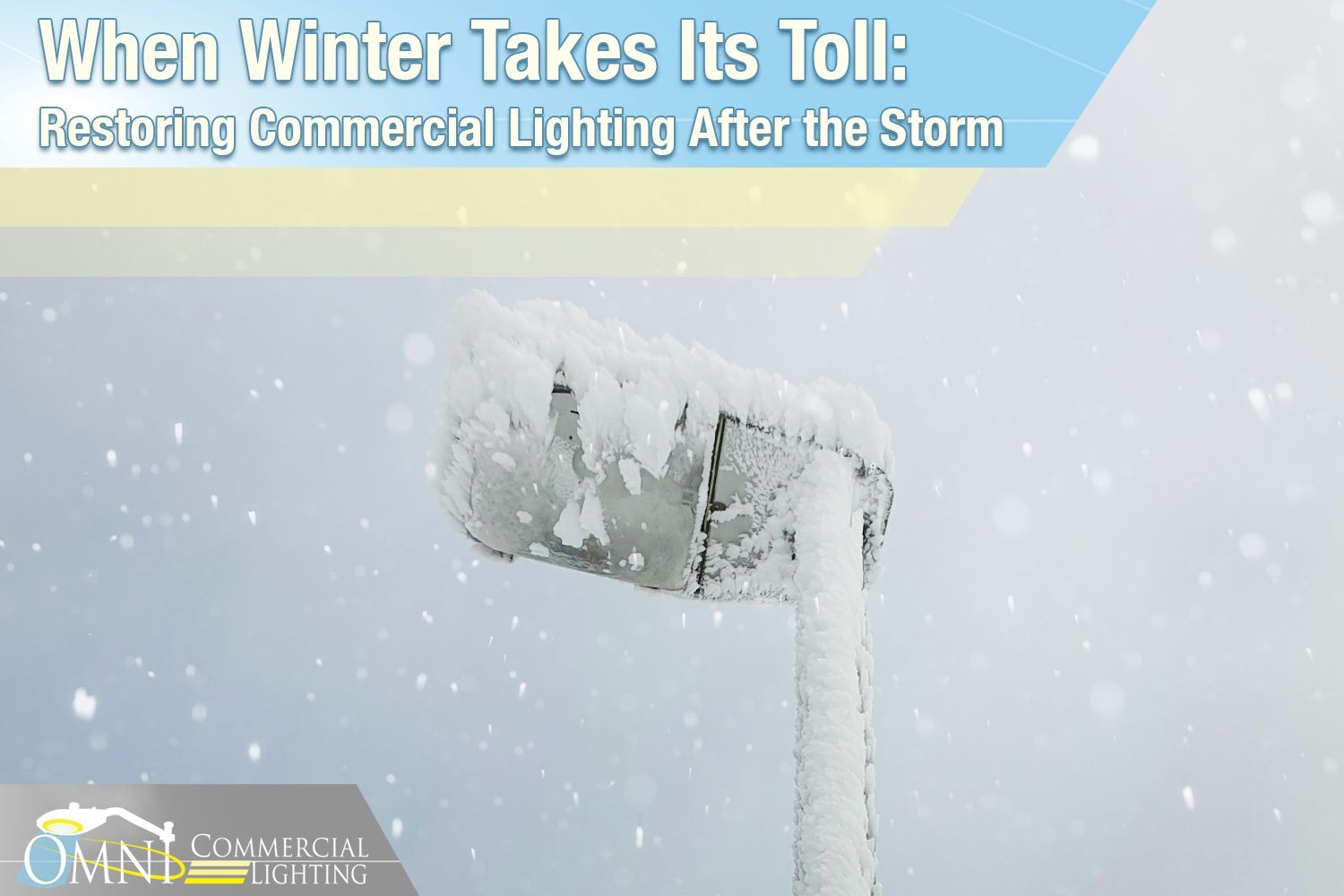
Winter storms don’t just test your patience; they test the durability of your property’s lighting system. February may fall in the middle of the coldest season, but it’s often when the real effects of winter weather begin to surface. Freezing rain, snow, and temperature swings can quietly damage lighting infrastructure, leading to visible outages or hidden issues that worsen if left unchecked.
At Omni Commercial Lighting, we’ve seen firsthand how harsh Midwest winters take a toll on commercial lighting systems. That’s why we encourage property managers to take a closer look now, before damage leads to safety risks, emergency repairs, or higher costs in the months ahead.
The Real Cost of Winter Wear and Tear
While lighting systems are designed to operate year-round, winter introduces unique challenges. Moisture from melting snow can seep into fixtures or conduit. Repeated freeze-thaw cycles cause materials to expand and contract, leading to cracks, corrosion, or loose connections. Cold temperatures are especially tough on older ballasts and non-LED lamps, often resulting in dim or flickering output, or complete failure.
From pole fixtures to monument signs, nearly every exterior lighting component is vulnerable. You may not notice damage immediately. In many cases, it’s only when lights fail to turn on at dusk or stay on well into daylight that something clearly isn’t right.
These subtle signs—slow startups, inconsistent performance, dark zones across your property—can signal a much deeper issue caused by winter’s impact.
What to Look for Post-Storm or Post-Freeze
Omni’s field teams often respond to sites where winter weather has triggered issues like flickering lights, discolored fixtures, or lights that remain stuck in the “on” or “off” position. These are red flags that should never be ignored.
In some cases, you may see water pooling near poles, snow plowed against light bases, or even leaning fixtures, often caused by frost heave or shifting ground. Other times, problems are less visible, such as burned-out lamps hidden behind snow piles or junction boxes damaged by plows or salt corrosion.
Our clients frequently call after noticing one section of the property looks dimmer than the rest or if signage isn’t illuminated during high traffic hours. These are exactly the kinds of performance issues that Omni can address quickly and professionally.
Omni’s Approach to Winter Damage Response
When our team is called in for storm-related lighting problems, we begin with a visual system survey. We override your system to activate all lighting zones so we can assess which fixtures are working and which are not. If a light is out, we dig deeper, checking lamps, ballasts, photocells, and other components to identify the cause.
Time clocks and controls are evaluated to ensure your lighting is turning on and off correctly. In cases where properties have multiple photocells or complex systems, we often conduct inspections before dawn or after sunset, ensuring the full system is functioning during actual operating hours.
We don’t inspect every single pole, wall pack, or building fixture during a routine site visit unless that level of detail is specifically requested and approved by the client. For large sites like Kildeer Market Place, it simply isn’t practical or cost-effective to do so within the standard service scope. That said, we can always provide a more detailed fixture-by-fixture inspection as a separate service when needed.
Don’t Delay, Small Problems Become Big Ones Fast
If your system sustained winter damage, the sooner you address it, the better. Minor wiring issues can escalate into full circuit failures. A dim or flickering light can be a sign of corrosion or ballast failure. And a malfunctioning photocell that goes unaddressed could lead to property-wide lighting downtime.
More importantly, poor lighting puts your people—and your reputation—at risk. Darkened walkways, flickering signs, and shadowed parking areas create real safety and liability concerns. And if damage occurs near a tenant’s entrance or public space, it can directly impact the customer experience.
Repair, Upgrade, or Both? Omni Can Help You Decide
Not all damage requires a full system replacement, but some winter issues highlight aging infrastructure. If your lighting system is still using outdated HID or fluorescent technology, now may be the time to consider a strategic LED upgrade.
LED systems perform better in cold weather, use less energy, and require fewer service calls throughout the year. Omni offers honest evaluations and no-pressure quotes for upgrades—tailored to your site, your budget, and your long-term goals.
Ready to Recover and Move Forward
Winter isn’t over yet, but February is the perfect time to take control of lighting performance. Whether your system just needs a few quick repairs or a deeper look at long-term solutions, Omni Commercial Lighting is ready to help.
We know what to look for, how to fix it, and how to keep your lighting systems operating at their best season after season.
Need a storm recovery assessment or repair?
Contact Omni today to schedule a service visit.
Let’s restore safety, visibility, and confidence to your property before the next storm hits.