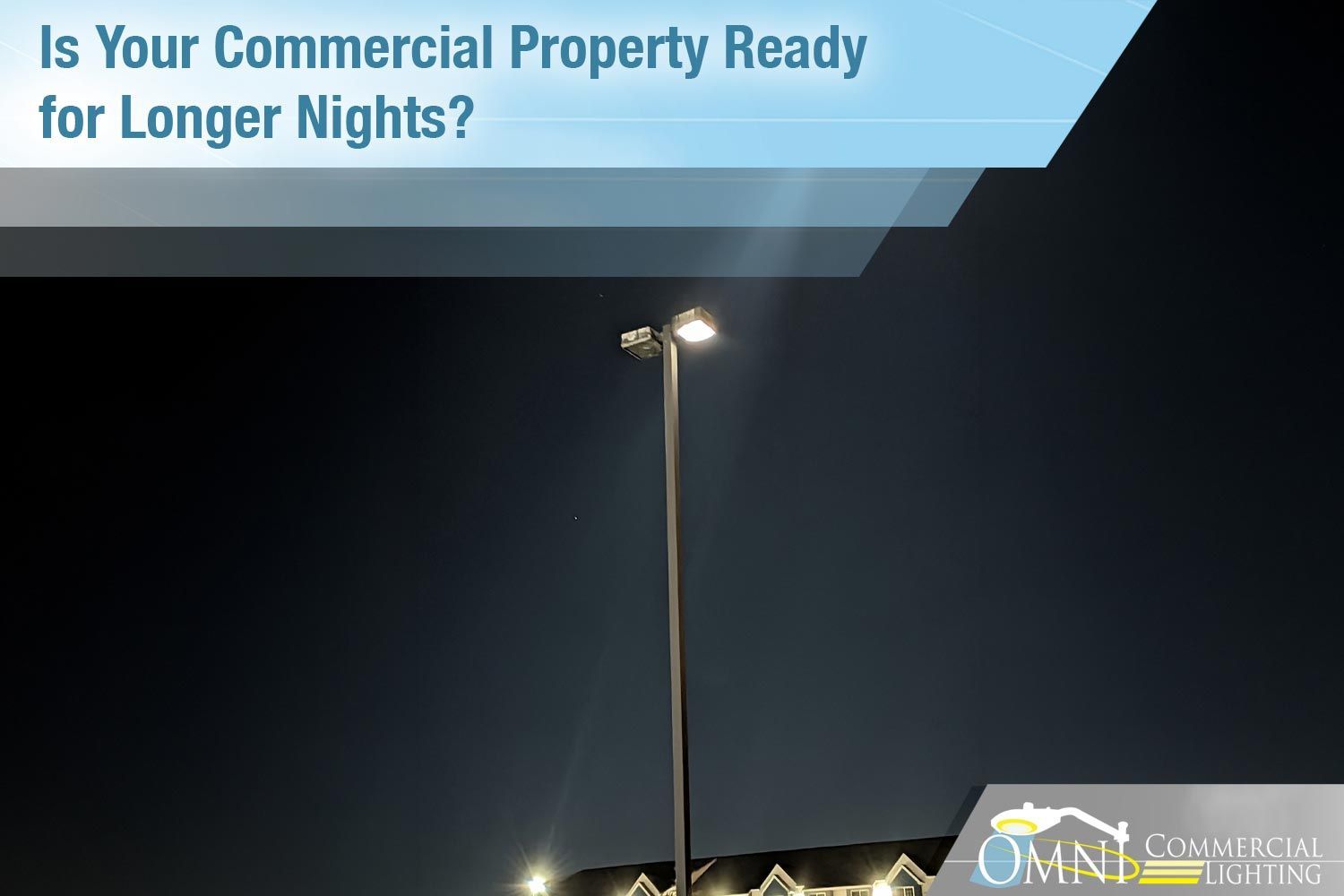
Is Your Commercial Property Ready for Longer Nights?
A Fall Lighting Inspection Checklist
Preparing Your Exterior Lighting Before Daylight Hours Get Shorter
As summer winds down and fall approaches, commercial properties face an important seasonal change: fewer hours of daylight.
Parking lots, walkways, building entrances, loading areas, and exterior signage that receives plenty of natural light throughout the summer will soon rely on artificial lighting earlier each day. A burned-out fixture or poorly illuminated area that went unnoticed in July can become much more noticeable, and potentially problematic, by October.
That makes early fall an ideal time for property and facility managers to evaluate their exterior lighting systems.
A proactive fall lighting inspection can help identify maintenance concerns, improve visibility, support security, and prepare your property for the longer nights and changes in weather.
Use this checklist to make sure your commercial property is ready.
1. Inspect Parking Lot Lighting
Start with one of the largest and most important, illuminated areas of your property: the parking lot.
Walk or drive through the property after sunset and look for fixtures that are burned out, flickering, noticeably dimmer than others, or providing inconsistent coverage.
- Pay particular attention to:
- Dark areas between light poles
- Burned-out or flickering fixtures
- Damaged or leaning poles
- Loose or damaged fixture heads
- Trees or landscaping blocking light
- Uneven illumination around pedestrian routes
Proper parking lot lighting helps drivers and pedestrians see vehicles, curbs, obstacles, and one another more clearly while creating a safer, more welcoming environment after dark.
2. Check Building Entrances and Exits
Every entrance and exit should be clearly visible after dark.
Inspect lighting around main entrances, employee doors, emergency exits, service entrances, and delivery areas. Even a single failed fixture can significantly affect visibility around a doorway.
Also look for obstructions caused by overgrown landscaping, awnings, signage, or other structures.
Employees and tenants who arrived and left work during daylight throughout the summer may soon be navigating the property in darkness, making reliable entrance and exit lighting especially important.
3. Walk Your Sidewalks and Pedestrian Areas
Don't evaluate your property only from behind the wheel.
Walk the same routes used by your tenants, employees, customers, and visitors. Inspect sidewalks, stairs, ramps, crosswalks, pathways, and transitions between buildings and parking areas.
Look for dark spots, inconsistent illumination, or sharp changes between brightly lit and poorly lit areas.
As fallen leaves, rain, frost, ice, and eventually snow become seasonal concerns, good visibility along pedestrian routes becomes increasingly important.
4. Inspect Wall Packs and Building Perimeter Lighting
Wall packs and perimeter fixtures illuminate areas around the sides and rear of commercial buildings that may not receive as much attention as parking lots and entrances.
Check fixtures around loading docks, dumpsters, utility areas, rear entrances, service areas, and building corners to make sure they are operating properly.
If older fixtures are frequently failing or no longer provide adequate illumination, fall may also be a good time to consider an LED upgrade rather than continuing to invest in repeated repairs.
5. Check Pylon Signs and Building Signage
Your lighting inspection shouldn’t stop at parking lots and building exteriors
As darkness arrives earlier, illuminated signage becomes increasingly important for helping customers and visitors identify businesses and navigate the property.
Inspect pylon and monument signs, channel letters, building-mounted signage, and directional or wayfinding signs. Look for burned-out sections, flickering, inconsistent illumination, or signs that appear noticeably dimmer than they should.
Properly illuminated signage helps maintain a professional appearance while keeping businesses and tenants visible during longer nighttime hours.
6. Test Photocells and Lighting Controls
Exterior fixtures may be in perfect condition but still fail to operate when needed if the controls aren't working correctly.
Check timers and other lighting controls to make sure exterior fixtures turn on at the appropriate time.
Seasonal changes can reveal timer settings that haven't been adjusted or photocells that are no longer responding properly to changing light levels.
Identifying these problems before fall is in full swing can help prevent your property from unexpectedly being left in the dark.
7. Look for Signs of Physical Damage
A fixture doesn’t have to be completely out to need attention.
During your inspection, look for signs of physical wear or damage, including cracked lenses, corrosion, exposed or damaged wiring, water intrusion, damaged pole bases, leaning poles, or evidence of vehicle impact.
Small problems can become more expensive when exposed to freezing temperatures, snow, ice, and winter precipitation. Identifying them in the fall gives you an opportunity to address them before winter arrives.
8. Review Your Lighting from a Security Perspective
Exterior lighting is an important part of commercial properties overall security strategy.
Walk the property after dark and consider whether entrances, parking areas, building perimeters, and other key locations have adequate visibility.
If your property uses surveillance cameras, consider how your exterior lighting effects camera performance. Dark areas, excessive glare, and poorly positioned fixtures can limit visibility and create gaps in coverage.
9. Schedule Preventative Maintenance Before Winter
Fall is an ideal time to address lighting issues before they become emergency repairs during the winter months.
Preventative maintenance can uncover aging components, electrical concerns, damaged fixtures, and other potential problems before they result in unexpected outages.
Taking care of these issues early can help reduce emergency service calls, extend the life of lighting equipment, maintain consistent illumination, and prepare exterior lighting systems for winter conditions.
Being proactive is often more convenient, and potentially more cost-effective, than discovering a lighting problem during the first major winter storm.
Your Fall Commercial Lighting Checklist
Before daylight hours become significantly shorter, make sure you've reviewed the following:
✓ Parking lot fixtures are operating properly
✓ Light poles and fixture heads are secure
✓ Entrances and exits are well illuminated
✓ Sidewalks, stairs, and pedestrian areas have adequate visibility
✓ Wall packs and perimeter fixtures are working
✓ Pylon signs and channel letters are fully illuminated
✓ Photocells and timers are functioning correctly
✓ Fixtures show no obvious signs of damage or corrosion
✓ Security cameras have adequate supporting illumination
✓ Preventative maintenance needs have been identified
If you can't confidently check every box, now is the time to address it.
Get Your Commercial Property Ready for Fall with Omni Commercial Lighting
Longer nights shouldn’t be the first time you discover a problem with your exterior lighting system.
At Omni Commercial Lighting, we help commercial property owners, property managers, and facility managers identify lighting concerns before they become larger issues. From parking lot and exterior lighting inspections to repairs, LED upgrades, signage lighting, and preventative maintenance, our team can help keep your property well illuminated and prepared for the seasons ahead.
Don’t wait until the days get shorter to discover what’s been hiding in the dark. Contact Omni Commercial Lighting today to schedule your fall lighting inspection and make sure your commercial property is ready for the longer nights ahead.